How it is calculated
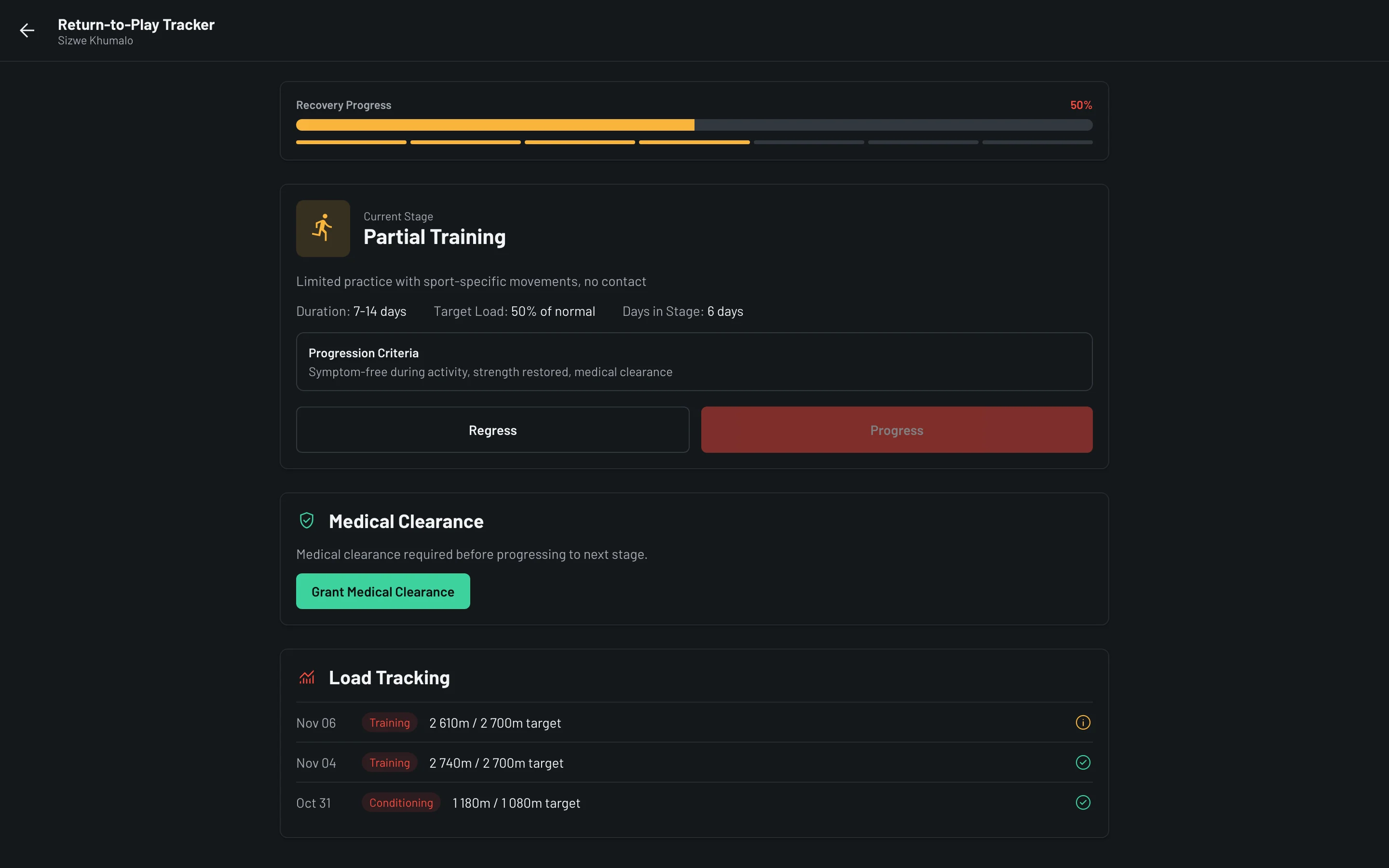
Stage target = baseline distance × stage share
- The baseline is the player's average total distance per full session in the 28 days before the injury.
Injured: 0%. Complete rest: 0%. Active recovery: 20%. Partial training: 50%. Full training: 80%. Return to play: 100%. Post-return monitoring: 100%, watched for 28 days.
The baseline is fixed when the plan starts. A player with no sessions in that window has no baseline, and the app does not invent one.
Moving up a stage needs medical clearance, recorded in the tracker with its date and notes.
How to read it
Staff log the player's distance at each stage and see it against the target, so the decision to move up a stage rests on what the player actually did.
Return-to-play targets from a 5 400 m baseline
| Stage | Target | Logged |
|---|---|---|
| Injured | 0 m | 0 m |
| Complete rest | 0 m | 0 m |
| Active recovery | 1 080 m | 1 180 m |
| Partial training | 2 700 m | 2 610 m |
| Full training | 4 320 m | Not reached |
| Return to play | 5 400 m | Not reached |
| Post-return monitoring | 5 400 m | Not reached |
Where you see it in the app